PC Components

Your PC componets category

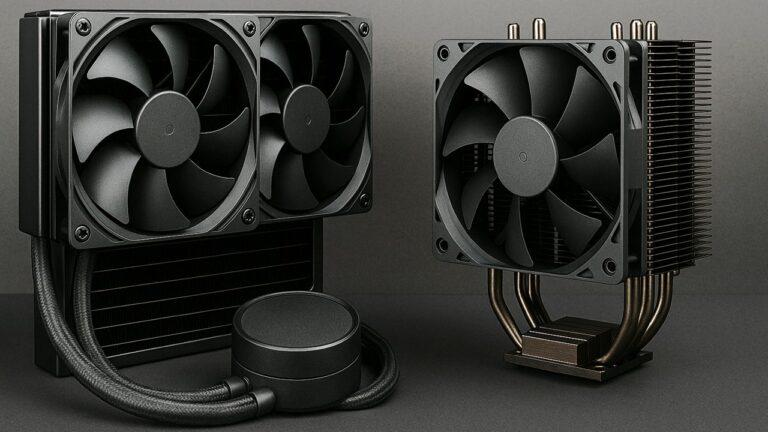
Is Liquid Cooler Better Than Air Cooler

Is Liquid Cooler Better Than Air Cooler? Pros, Cons, and Best Cooling Choice for Your PC Build

Liquid coolers can cool your CPU better because they use liquid to move heat away faster than air. They’re great for keeping high-end, overclocked PCs running cool, but they’re more expensive and need more setup and care. Air coolers are simple: a fan and metal fins help pull heat off the CPU. They’re cheaper, easier

Is Liquid Cooler Better Than Air Cooler? Pros, Cons, and Best Cooling Choice for Your PC Build Read More »

What Radiator Size Should You Choose for AIO Liquid Cooler?

When deciding what radiator size you should choose for your AIO liquid cooler, the key is balancing performance with space. If you’re looking for top-notch cooling, larger sizes like 240mm or 360mm are your go-to, especially for overclocked systems. However, if space is tight or your cooling needs are moderate, a 120mm or 140mm radiator

What Radiator Size Should You Choose for AIO Liquid Cooler? Read More »

Adjusting Graphics Card Settings for Improved Video Conference Quality

Adjusting Graphics Card Settings for Improved Video Conference Quality

Have you ever wondered why some video calls look so much clearer than others? Well, a big part of that clarity comes from how the graphics card settings are adjusted. In this guide on “Adjusting Graphics Card Settings for Improved Video Conference Quality,” we’ll explore simple tweaks you can make to enhance your video calls.

Adjusting Graphics Card Settings for Improved Video Conference Quality Read More »

How-to-Calibrate-Your-CPU-for-Balanced-Power-and-Performance

How to Calibrate Your CPU for Balanced Power and Performance

Ever noticed your computer running slower than usual or getting uncomfortably hot? You might need to calibrate your CPU. Balancing power and performance is key to keeping your system running smoothly without unnecessary power drain or overheating. In this guide, we’ll walk you through how to calibrate your CPU for balanced power and performance, ensuring

How to Calibrate Your CPU for Balanced Power and Performance Read More »

Troubleshooting-Steps-When-Your-CPU-Wont-Boot

Troubleshooting Steps When Your CPU Won’t Boot

A functioning CPU is the heart of any computer, enabling it to perform essential tasks and run smoothly. When your CPU won’t boot, it can cause significant inconvenience and panic, potentially disrupting your workflow or gaming session. Understanding the steps to troubleshoot this issue can help you resolve it quickly and efficiently, minimizing downtime and

Troubleshooting Steps When Your CPU Won’t Boot Read More »

Preventing-CPU-Bottlenecks-in-Multi-Threaded-Applications

Preventing CPU Bottlenecks in Multi Threaded Applications (How To)

Optimizing CPU performance in multi-threaded applications is key to keeping your system running smoothly. When multiple threads compete for CPU resources, CPU bottlenecks can occur, leading to slowdowns. These bottlenecks hurt performance, degrade user experience, and can even cause hardware issues over time. Picture your CPU trying to juggle too many tasks at once; it

Preventing CPU Bottlenecks in Multi Threaded Applications (How To) Read More »

Basics of CPU Overclocking for Beginners

Basics of CPU Overclocking for Beginners

In the world of computer performance, CPU overclocking stands as a fascinating frontier. At its core, overclocking is the practice of pushing your computer’s processor beyond its factory-set limits to achieve higher speeds. This practice is highly relevant for those seeking to boost their system’s performance, especially in gaming or demanding computational tasks. The benefits

Basics of CPU Overclocking for Beginners Read More »

Scroll to Top